Why Do We Understand English but Struggle to Speak It?

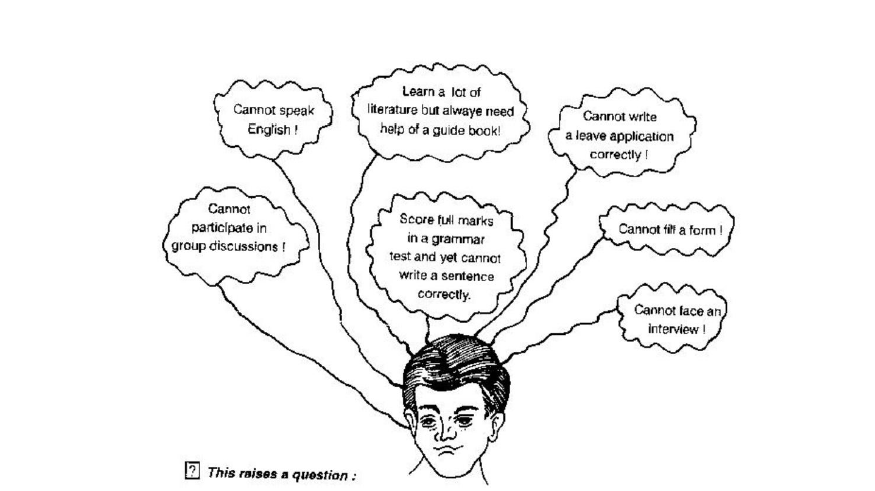
Have you ever watched an English movie, listened to a conversation, or read an article and understood almost everything, but when it is your turn to speak, the words suddenly disappear? If so, you may need more English speaking practice rather than more grammar or vocabulary.

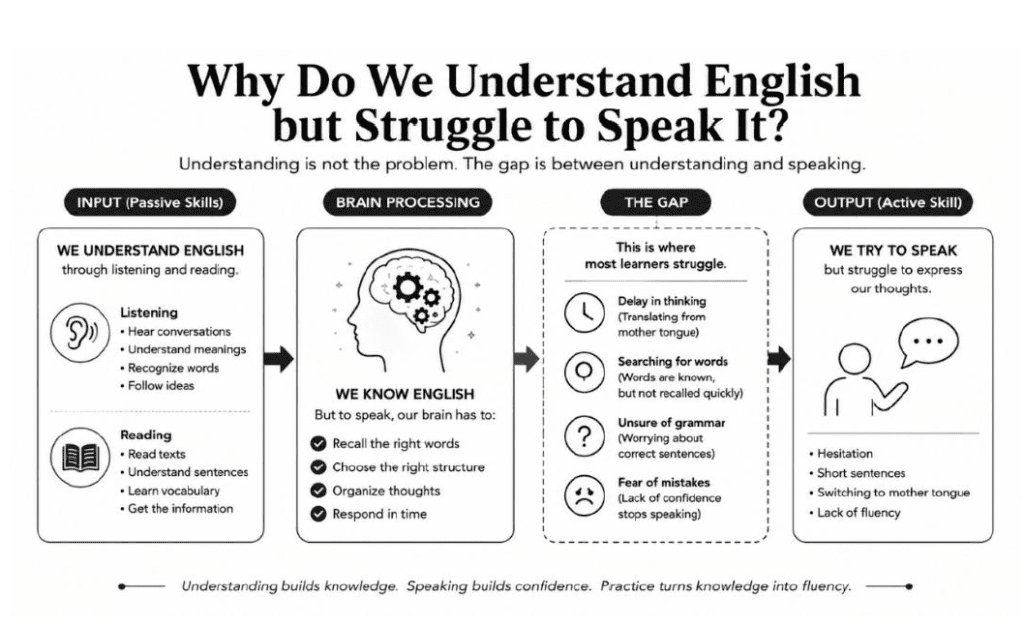
You know what you want to say. Moreover, the language already makes sense to you. In fact, you may even know the grammar rule and the correct vocabulary. Yet, when you try to express yourself, you hesitate, search for words, or switch back to your mother tongue. This is one of the most common challenges faced by English learners. Many people believe that if someone understands English well, speaking fluently should come naturally. However, understanding a language and speaking a language are two different skills.

english speaking practice

A person can have strong listening and reading skills but still struggle with speaking because speaking requires a different kind of practice.

Let us understand why this happens and how learners can bridge the gap between knowing English and using English confidently.

1. Passive Knowledge vs Active Usage

The biggest reason behind this gap is the difference between passive knowledge and active knowledge. Passive knowledge means:

  • You understand words when you hear them.
  • While reading, sentences become familiar.
  • During conversations, the overall meaning is easy to follow.

Active knowledge means:

  • You can recall words quickly.
  • With practice, you create sentences naturally.
  • Eventually, you express your thoughts without excessive hesitation.

Most learners spend years building passive knowledge through reading, watching, and listening. However, they get fewer opportunities to convert that knowledge into active communication. This is where English speaking practice becomes essential because it helps learners use what they already know. For example, a learner may understand the sentence:

“I would have completed the task if I had received the information earlier.”

But when speaking, they may not be able to produce a similar sentence because their brain has not practised retrieving that structure actively. Speaking is not only about knowing. It is about accessing what you know at the right moment.

2. The Brain Needs Practice, Not Just Information

Learning a language is not like memorising facts for an examination. Instead, knowing a grammar rule does not automatically mean you can use it in a conversation. If you want to improve through English speaking practice, you must actively use the language. For example, imagine learning how to swim by reading books about swimming. Although you may understand the techniques, you only become comfortable after entering the water. Likewise, speaking English works in the same way. Therefore, your brain needs repeated English speaking practice to create quick connections between thoughts and words. Every time you speak, your brain learns:

  • What words should I use?
  • Which structure fits this situation?
  • How can I express this idea naturally?

With regular practice, this process becomes faster and more natural.

3. Translating Thoughts from the Mother Tongue

Another major reason learners struggle with speaking is translation. Many learners think in their native language first and then try to convert their thoughts into English. This creates a delay. The mind starts doing extra work:

Think → Translate → Check grammar → Speak

By the time the sentence is ready, the conversation may have moved ahead. Fluent speakers gradually develop the habit of thinking directly in English. This does not happen suddenly. It develops through exposure and practice. A good way to start is by thinking in simple English:

  • I need water.
  • Right now, I am getting late.
  • Before leaving, I have to finish this work.

Small daily thoughts slowly train the brain to process English naturally.

4. Fear of Making Mistakes

Fear is one of the biggest enemies of speaking ability. Many learners hesitate because they are constantly monitoring themselves:

  • Is my grammar correct?
  • Could my pronunciation be wrong?
  • Will people judge me?

This creates pressure and affects natural communication. As a result, people who focus too much on avoiding mistakes stop expressing their ideas freely. After all, communication is the primary purpose of language. Moreover, a person who communicates despite small mistakes is often more effective than someone who knows many rules but avoids speaking. This is why English speaking practice is essential for building confidence and fluency. Instead of fearing mistakes, learners should treat them as feedback because they highlight areas for improvement. Consequently, confidence grows through regular practice and real conversations.

5. Learning Words Without Learning Their Usage

Many learners have a large vocabulary but still struggle to speak. Why?

Because they know words individually but not how to use them naturally. For example, knowing the word “opportunity” is different from knowing how to use it:

“This is a great opportunity for me.”
“I got an opportunity to improve my skills.”

Fluency requires learning:
phrases
expressions
sentence patterns
common combinations of words

Instead of memorizing isolated words, learners should learn language chunks.

For example:
Instead of only learning “decision,” learn:
“make a decision”
“take a decision”
“a difficult decision”

This makes speaking faster because the brain recalls ready-made patterns.

6. Lack of Speaking Environment

Another reason learners understand English but cannot speak it is lack of practice opportunities. A person may spend hours consuming English content but rarely speak. Listening helps you understand the language, but speaking develops only through speaking. Even simple activities can help:

– talking to yourself in English
– describing your surroundings
– discussing your day
– recording your voice
– participating in conversations

The goal is not to speak perfectly. It is to train your speaking muscle

7. Trying to Use Complex English

Many learners believe fluency means using difficult vocabulary and complicated sentences. This often creates hesitation. Effective communication is not about using impressive words. It is about expressing ideas clearly. A fluent speaker can explain a complex idea using simple language. For example:

Instead of: “Due to the unfavorable circumstances, I was unable to accomplish the assigned task.”

A natural speaker may say: “I couldn’t complete the task because the situation was difficult.”

Simple and clear communication is a sign of strong language ability

8. Overthinking While Speaking

Overthinking is another common barrier. Some learners plan every sentence before speaking. They mentally prepare:

  • First sentence…
  • Next sentence…
  • Appropriate tense…
  • Suitable word…

This makes conversations stressful. Natural communication requires flexibility. It is better to start with simple sentences and build confidence gradually. Speaking improves when the brain learns that it is safe to communicate.

9. Not Imitating Natural English

Children learn languages by listening and copying. Adult learners often ignore this powerful method. When learners listen to fluent speakers, they can observe:

– sentence patterns
– pronunciation
– expressions
– natural responses

Repeating after native or fluent speakers, a technique often called shadowing, can improve speaking rhythm and confidence. The aim is not to copy someone’s identity or accent. Aim is to understand natural language flow.

How to Convert Understanding into Speaking Ability

english speaking practice

To move from understanding English to speaking English, learners need to change their approach. Instead of only consuming English, start producing it. Rather than simply reading vocabulary, use it in complete sentences. Likewise, instead of waiting for confidence, practice until it develops. Most importantly, focus on communication instead of only on mistakes.

A simple daily routine can create a big difference:

– Listen to English for 15 minutes.
– Speak for 10 minutes.
– Learn useful expressions.
– Use new words in conversations.
– Reflect on your progress.

Small consistent efforts create long-term improvement.

Final Thoughts

Understanding English is an achievement, but it is only one part of language learning. Speaking requires practice, confidence, quick recall, and regular use. The gap between understanding and speaking is not a sign that a learner cannot become fluent. It simply shows that a different type of practice is needed. English fluency does not come from knowing more and more rules. It comes from using the language repeatedly until it becomes a natural part of communication.

Remember:

A language becomes fluent not when we only understand it, but when we start using it.

FAQs:

Many learners develop strong listening and reading skills before practising speaking. As a result, they understand English but struggle to recall words and form sentences during conversations. Regular English speaking practice helps convert passive knowledge into active communication.

Improve your English speaking practice by speaking every day, thinking in English, recording your voice, joining conversation groups, and practising with feedback. Consistency is more important than perfection.

No. Understanding English is only one part of language learning. Fluency develops when you can express your ideas naturally, respond quickly, and communicate confidently in real-life situations.

This usually happens because your brain needs more speaking practice. Although you know the words, recalling them under pressure takes regular use in conversations.

The best Spoken English course in Delhi combines practical speaking sessions, experienced trainers, interactive classroom activities, and personalised feedback. It should focus on improving fluency, pronunciation, vocabulary, grammar, and communication skills through real-life conversations rather than theory alone. GILP offers a comprehensive Spoken English course in Delhi that helps students, professionals, and job seekers build confidence for interviews, academics, and workplace communication through structured, practice-oriented training.