Communication skills are the ability to share information clearly and efficiently.They include verbal and nonverbal methods.These methods include listening, speaking, writing, and body language. Effective communication requires conciseness, appropriate tone, active listening, empathy, and responsiveness to others’ perspectives.
Strong communication skills support smooth interaction, collaboration, and rapport at work, socially, and in relationships. Building them takes practice and feedback to express ideas clearly, prevent misunderstandings, and engage others constructively.
Why are communication skills important?
Communication skills are critical for successful cooperation, connection building, and problem solving. They improve the clear sharing of ideas, reduce misunderstandings, and promote productivity and harmony in a variety of personal and professional settings.
Effective Collaboration
Clear communication promotes collaboration among team members by ensuring that everyone understands their roles and responsibilities. It reduces misunderstandings, promotes togetherness, and increases productivity by creating a harmonious work atmosphere.
Building Relationships
Strong communication helps build and maintain positive relationships. By expressing yourself clearly, listening actively, and connecting with others, you foster trust, respect, and meaningful partnerships.
Problem-Solving
Strong communication is essential for identifying, analyzing, and solving problems. It helps people share concerns and ideas, align goals, reduce confusion, and implement effective solutions.
Personal Development
Improved communication skills promote self-expression, confidence, and forcefulness. They allow people to successfully express their thoughts and feelings, which leads to better personal and professional development.
What is it and why does it matter?
Communication skills help you share information clearly. You can do this with verbal and nonverbal methods. These skills include listening, speaking, writing, and body language. They are essential for strong personal and professional relationships. They also support teamwork, better decisions, and problem-solving.
Communication skills help build and maintain relationships. Clear, compassionate communication fosters trust and respect, and helps resolve conflicts peacefully with solutions that work for everyone.
Speaking skills often drive professional success. Employers value clear explanations, collaboration, and confident client communication. Strengthening communication is key for social interactions, achieving goals, and personal and career growth.
How can you communicate more clearly and effectively?
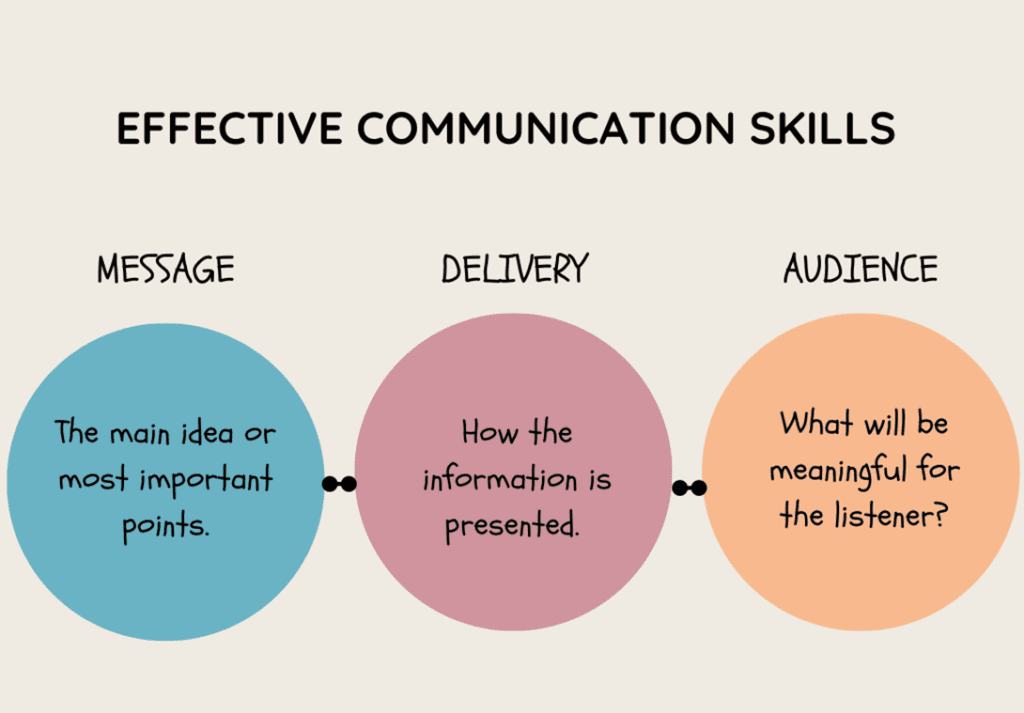
To communicate more clearly and successfully, focus on message clarity, actively listen to others, tailor your communication to your audience, and accept comments for clarification. These techniques improve comprehension, involvement, and rapport in both personal and professional settings.
Be Clear and Direct
Communicate clearly with simple, direct language and a logical flow to avoid confusion and help your audience understand key points.
Active Listening
Actively listen to feedback and perspectives, noting verbal and nonverbal cues. Acknowledge others with empathy—two-way communication builds understanding and collaboration.
Utilize to Your Audience
Tailor your communication style and content to your audience’s needs and preferences. Consider their background, expertise, and preferred style to improve clarity and effectiveness.
Seek Response and Clarification
Invite audience input, clarify unclear points, and encourage questions. Address misunderstandings quickly, and welcome feedback to show strong communication and build trust.